
Macro
Understand the broader forces shaping financial markets—from interest rates and Dollar strength to volatility, expectations and global capital flows.
Macro explains the environment in which price moves.
Financial markets do not operate in isolation. Interest rates, inflation, economic growth, monetary policy, volatility and capital flows shape the conditions under which trends, reversals and risk sentiment develop.
It defines the backdrop
Macro helps explain whether markets are operating in a supportive, restrictive or uncertain environment.
It links asset classes
Currencies, bonds, equities, commodities and crypto react to many of the same underlying forces.
It improves context
Technical price action becomes more useful when interpreted within the broader financial environment.
The market watches a small number of recurring forces.
The global economy is complex, but traders do not need to follow every headline. A focused macro framework concentrates on the variables that repeatedly influence expectations, asset allocation and volatility.
The importance of each driver changes over time. The objective is not to find one indicator that explains everything, but to understand how the broader environment is evolving.
Risk-on, risk-off or mixed conditions?
Macro analysis helps traders classify the broader environment before focusing on individual charts.
Capital seeks growth.
Investors become more willing to hold risk assets as confidence and liquidity conditions improve.
- Stronger appetite for equities and crypto
- Lower perceived market stress
- Greater willingness to deploy capital
Capital seeks protection.
Investors reduce exposure and move toward liquidity, safety or lower-risk assets.
- Higher demand for defensive positioning
- Elevated volatility
- Reduced appetite for speculative assets
Signals are not aligned.
Different macro drivers point in conflicting directions, creating uncertainty and unstable correlations.
- Cross-market divergence
- Changing narratives
- Greater need for selective execution
Build context without trying to predict every headline.
Macro becomes useful when it is reduced to a repeatable process. Focus on the environment, identify the dominant drivers, then combine that information with price.
Identify the dominant theme
Determine which macro forces are currently receiving the most market attention.
Evaluate cross-market signals
Compare the Dollar, yields, volatility and major asset classes for alignment or divergence.
Connect macro to structure
Assess whether the broader environment supports or challenges current price action.
Adjust risk and execution
Adapt exposure when uncertainty, volatility or event risk increases.
Macro provides the environment. The Framework provides the decision process.
Macro does not replace price action. It works alongside Liquidity, Market Structure, Risk & Execution and Market Behavior to create a more complete market view.
Hidden Macro Compass
Bring the most important macro drivers into one structured view. Hidden Macro Compass is designed to reduce scattered research and help traders interpret Dollar strength, yields, volatility and market conditions more efficiently.
- Key macro indicators in one place
- Structured market context
- Cross-asset awareness
- Designed for active traders and investors
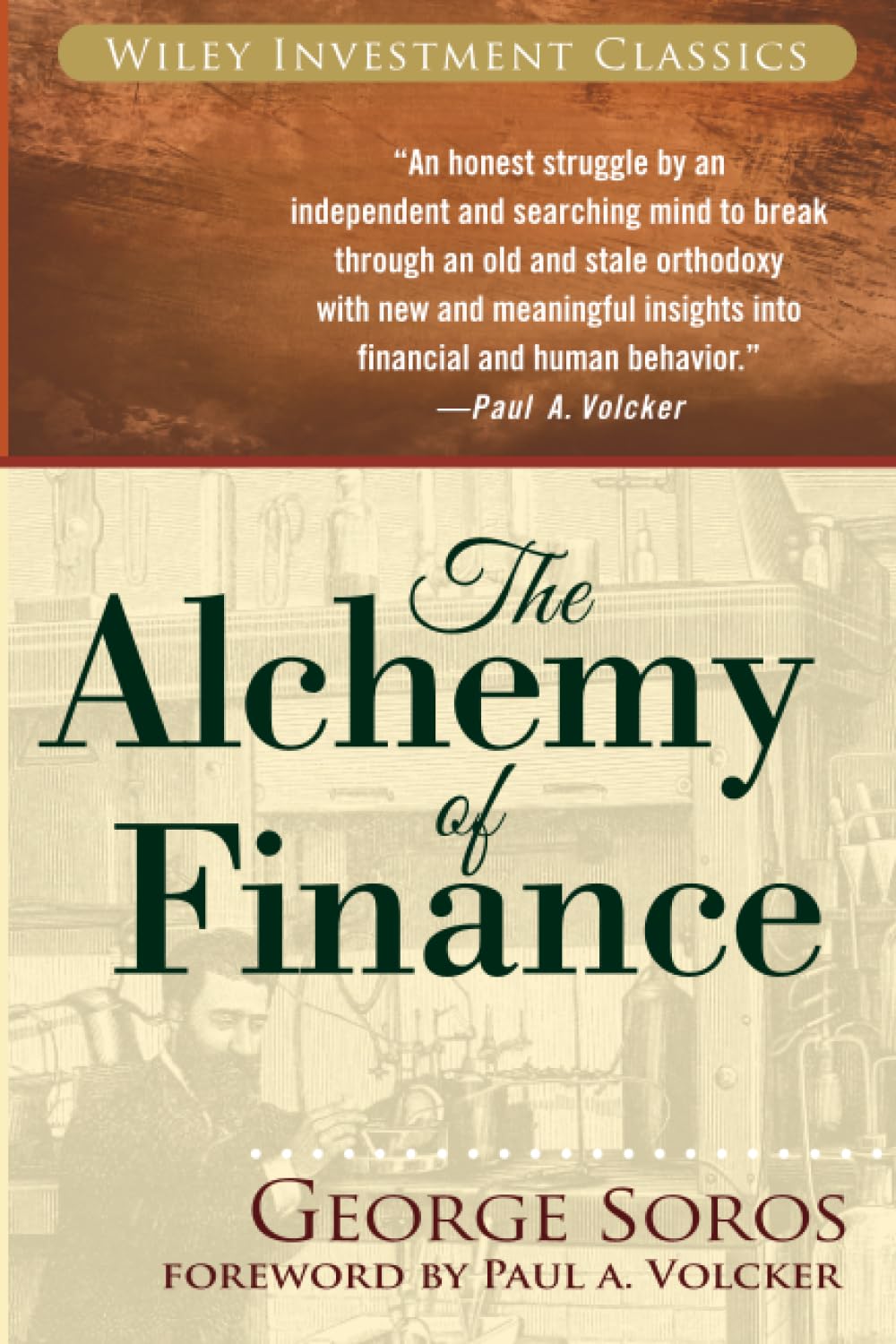
The Alchemy of Finance
The Alchemy of Finance explores the interaction between credit, expectations, policy, capital flows and financial markets. Soros explains how boom-and-bust cycles develop and why markets can reinforce the conditions that initially moved them.
The book fits the NGS Macro Framework because it connects monetary conditions, investor behavior and cross-market relationships into one broader model of how financial systems evolve.
Macro becomes noise when every data point is treated as a signal.
Trading individual headlines
Markets respond to expectations, positioning and surprises—not data in isolation.
Ignoring price action
Macro provides context, but execution still depends on observable market behavior.
Following too many indicators
More data does not automatically create more clarity.
Assuming one driver explains everything
The dominant market narrative changes as conditions evolve.
Explore the other four areas.
Liquidity
Understand where participation concentrates and why key levels matter.
Open Framework → 02Market Structure
Understand trend, range and structural transitions.
Open Framework → 04Risk & Execution
Protect capital and apply your process consistently.
Open Framework → 05Market Behavior
Study expectations, positioning and reflexivity.
Open Framework →How strong is your macro framework?
Take the free assessment to identify your strongest areas, your biggest blind spots, and the next part of the NGS Framework worth improving.
Macro FAQ
What is macro analysis in trading?
Macro analysis examines the broader economic and financial forces influencing markets, including rates, inflation, growth, volatility and capital flows.
Is macro only useful for long-term investors?
No. Short-term traders can also benefit from understanding volatility, event risk and the broader environment surrounding price action.
Can macro predict market direction?
No. Macro provides context and helps traders understand changing conditions. It does not eliminate uncertainty.
Which macro indicators matter most?
The most useful indicators depend on the current environment, but the US Dollar, bond yields, interest rates, volatility, inflation and growth remain widely relevant.
Should macro replace technical analysis?
No. Macro explains the environment, while Market Structure and Liquidity help interpret how price is behaving within that environment.
What is the biggest mistake traders make with macro?
Reacting to isolated data releases without considering expectations, positioning and the broader market narrative.