
Market Behavior
Understand how expectations, positioning, narratives and reflexive feedback loops influence price—and why markets can move far beyond what appears rational.
Markets are moved by people reacting to one another.
Price reflects the decisions, expectations and risk preferences of millions of participants. Market Behavior helps explain why the same information can produce different reactions, why trends can reinforce themselves, and why sentiment can move faster than fundamentals.
Expectations shape reactions
Markets often react to the difference between what was expected and what actually occurred.
Positioning shapes pressure
Existing exposure influences how aggressively participants must buy, sell or reduce risk.
Price changes behavior
Rising or falling prices can attract new participants and reinforce the existing move.
Why the same market can feel completely different.
Markets are not static systems. Every participant interprets information through a different lens, carries different risk, and reacts to changing prices in real time.
This creates feedback loops. Expectations affect positioning, positioning affects price, and changing price then affects expectations again.
Price does not only reflect reality. It can help create it.
When prices rise, confidence can increase, capital can follow, and the original move can strengthen. When prices fall, fear, forced selling and risk reduction can reinforce the decline.
Movement attracts more participation.
A rising market can validate bullish expectations and encourage further buying.
- Momentum attracts attention
- Confidence reinforces positioning
- Narratives strengthen with price
- Trend persistence increases
Pressure forces participants to reduce risk.
A falling market can damage confidence, trigger exits and accelerate defensive behavior.
- Losses create forced decisions
- Sentiment deteriorates
- Liquidity can disappear
- Volatility can expand
Observe what participants are responding to.
Market Behavior becomes useful when it is reduced to a practical process rather than treated as abstract psychology.
Identify the dominant narrative
Determine what participants currently believe is driving the market.
Evaluate expectations
Ask whether current price behavior already reflects the expected outcome.
Observe positioning pressure
Consider where participants may be forced to enter, exit or reduce exposure.
Watch the feedback loop
Assess whether price is reinforcing or challenging the existing narrative.
Behavior explains the participants. The Framework explains the market.
Market Behavior connects human expectations to observable price action. Liquidity shows where participation concentrates, Market Structure shows how price develops, Macro defines the environment, and Risk & Execution control the response.
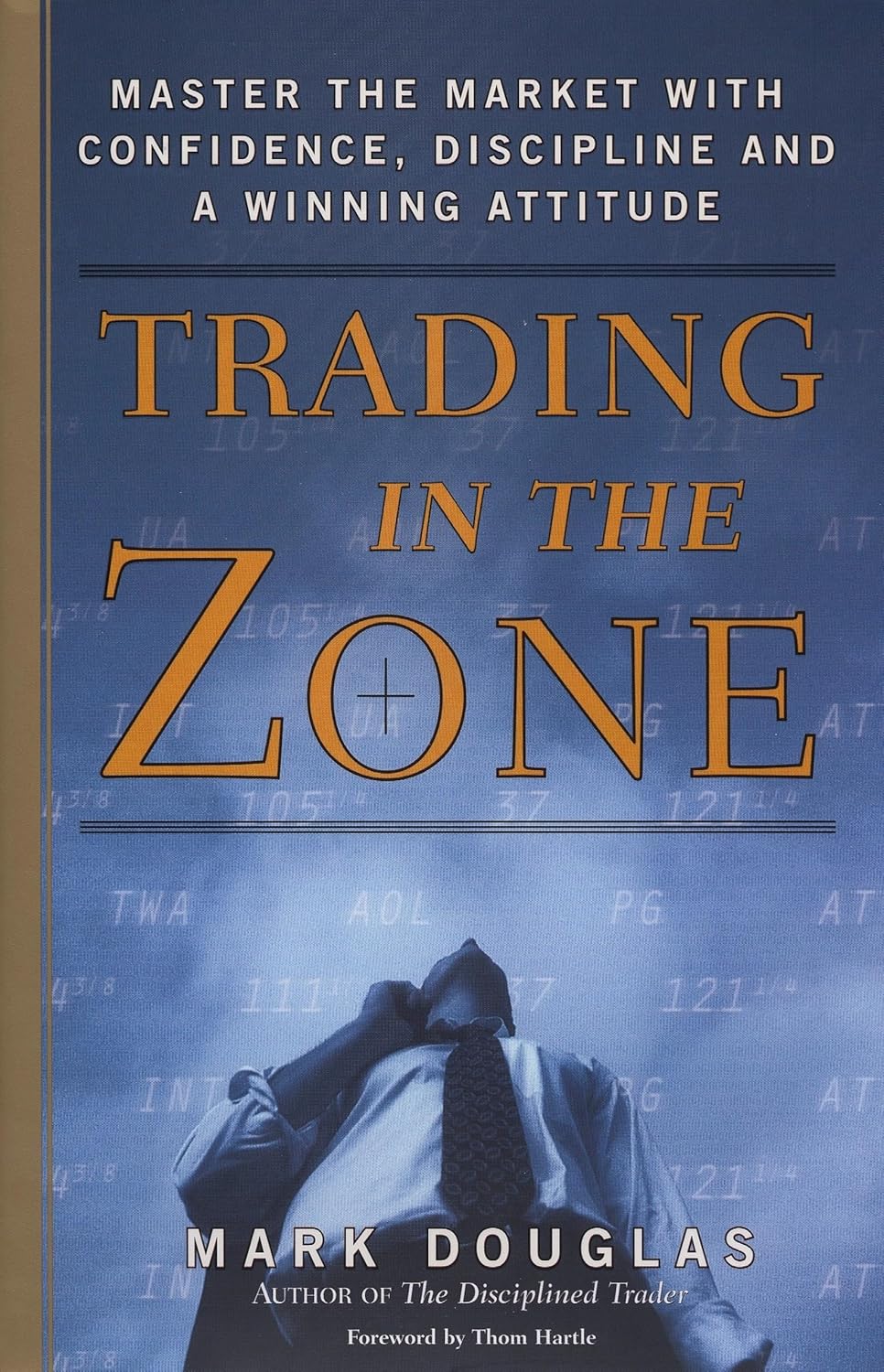
Trading in the Zone
Trading in the Zone examines how beliefs, expectations and probabilistic thinking influence trading decisions. Mark Douglas explains why traders often interpret the same market differently and why personal certainty can become dangerous in an uncertain environment.
The book fits the NGS Market Behavior Framework because it connects perception, bias and emotional response directly to decision-making under market pressure.

How to Think in the Markets
Continue with a concise introduction to perception, bias and reflexivity. The guide is designed to help traders think more clearly about the relationship between information, expectations and price.
- Perception and market interpretation
- Bias and decision-making
- Reflexive feedback loops
- Process over prediction
Behavior becomes dangerous when emotion is mistaken for information.
Assuming markets must be rational
Price can remain disconnected from apparent fair value for longer than expected.
Confusing narrative with evidence
A convincing explanation does not automatically make a market view correct.
Ignoring expectations
Markets often react to surprises relative to consensus, not the data alone.
Projecting personal emotions onto price
Fear and conviction can distort interpretation after exposure begins.
Explore the other four areas.
Liquidity
Understand where participation concentrates and why key levels matter.
Open Framework → 02Market Structure
Understand trend, range and structural transitions.
Open Framework → 03Macro
Understand the forces shaping the broader market environment.
Open Framework → 04Risk & Execution
Protect capital and apply your process consistently.
Open Framework →How well do you understand market behavior?
Take the free assessment to identify your strongest areas, your biggest blind spots, and the next part of the NGS Framework worth improving.
Market Behavior FAQ
What is Market Behavior?
Market Behavior describes how expectations, positioning, sentiment and participant decisions influence price.
What is reflexivity?
Reflexivity is the feedback loop in which participants influence price while changing prices also influence participants.
Why do markets move beyond fair value?
Momentum, narratives, positioning and feedback loops can reinforce price movements for extended periods.
Why can expectations matter more than the news?
Markets often price the expected outcome in advance and react most strongly to the difference between expectation and reality.
Can sentiment be used as a standalone signal?
No. Sentiment provides context, but it should be evaluated alongside Liquidity, Market Structure, Macro and Risk & Execution.
What is the biggest behavioral mistake traders make?
Allowing personal fear, greed or conviction to replace observable market evidence.